Hyaluronic acid is sold as a hydration miracle. A single serum, the pitch goes, holds a thousand times its weight in water, so a few drops and your skin plumps up like a grape. Which is why the people who buy it most religiously are the ones a little puzzled when their skin ends up feeling tighter a couple of hours later, not softer.
That isn't them doing something wrong, exactly. It's HA doing exactly what it does — just without the second half of the routine that makes it work.
Hyaluronic acid is a sponge, not a tap
The useful mental model, and the one dermatologists keep repeating in long-form writing on the topic, is a sponge. Hyaluronic acid is a humectant: a molecule that holds onto water that is already there. It isn't itself a source of water for your skin. A column in Dermatology Times puts the mechanism plainly — HA "is not a source of water for skin hydration" and works best when the water it attracts is then "trapped in the skin with the occlusive moisturizing ingredients." Dimethicone, shea butter and petrolatum are the examples it gives.
So the sponge pulls water from somewhere. In humid weather it can pull some from the air. In a dry, air-conditioned room — or on a plane, or anywhere else the atmosphere is drier than your skin — there's not much water in the air to grab, so the next-easiest source is you. Specifically, the deeper layers of your own skin.
That's the step most skincare advertising glosses over. The same Dermatology Times column notes that in low ambient humidity, hyaluronic acid can only reliably draw moisture from the atmosphere "at high ambient humidity, around 70%." Below that, if you apply pure HA to dry skin and leave it uncovered, the piece warns, "transepidermal water loss will increase, and the skin will get drier." The threshold figure isn't tied to a cited primary study in the column, so treat it as rough guidance rather than a sharp line — but the direction of the effect is well-established.
Why does hyaluronic acid sometimes dry you out?
Three things have to line up for the "HA made my skin drier" effect to show up noticeably:
- The air around you is dry. A cold-weather bedroom with the heater on, a long-haul cabin, an aggressively air-conditioned office. Singapore outdoors doesn't usually count. Singapore indoors, with the AC on blast at 22°C, often does — relative humidity inside a chilled room drops much lower than the muggy number outside.
- You applied the HA to visibly dry skin. No toner, no mist, nothing damp. The serum has nothing surface-level to bind, so it reaches for the next-nearest water, which is in your epidermis.
- Nothing went on top of it. No cream, no balm, no occlusive film. The water the sponge pulled up now evaporates straight out of your face.
Change any one of those and you dampen the effect. Change all three and HA goes back to doing what it was supposed to do, which is sit on your skin as a cushion of held water.
The two-step fix most routines are missing
The adjustment is almost embarrassingly simple, and it isn't "throw out the HA serum you bought." It's two things, in order.
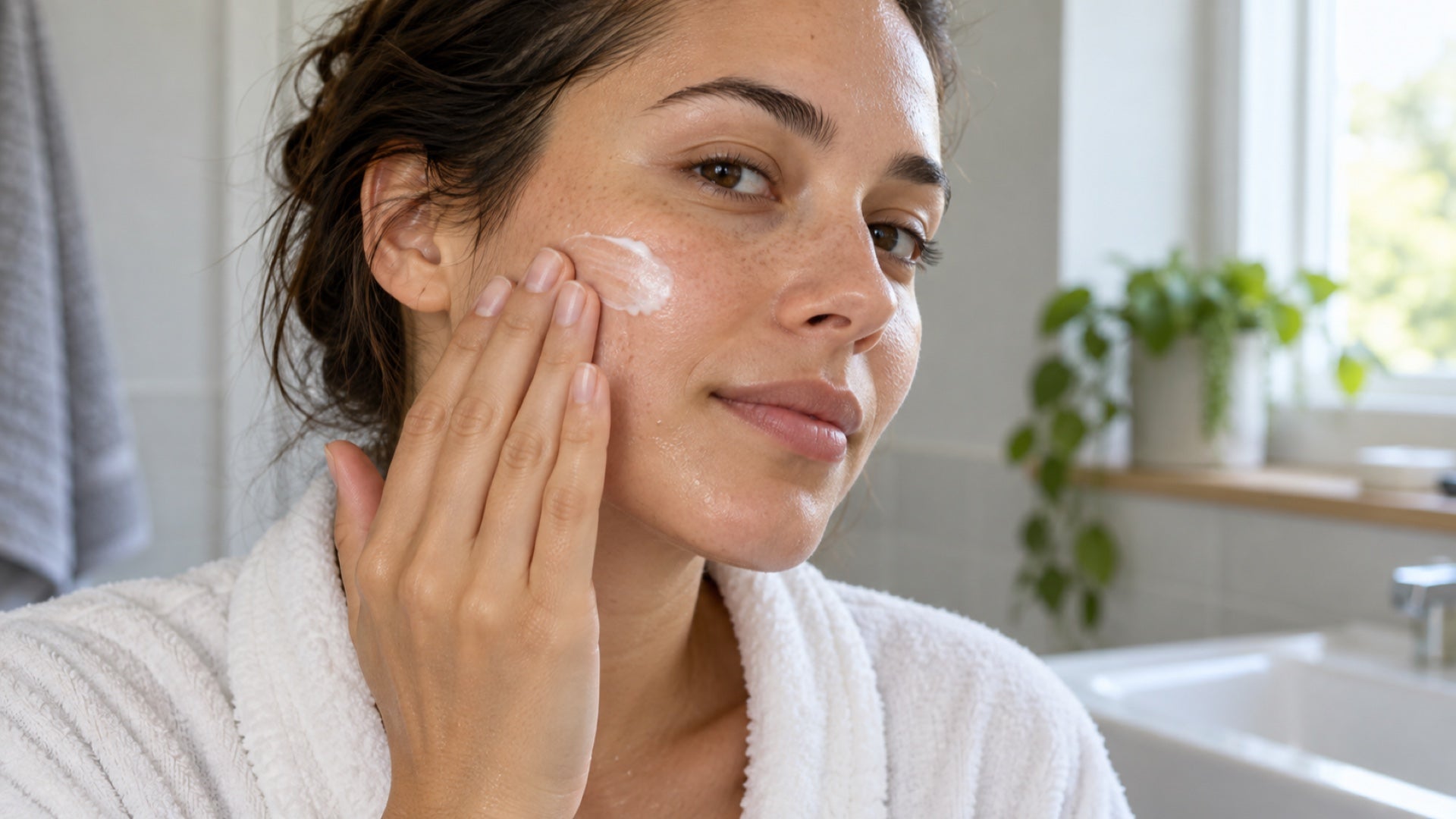
Apply it to slightly damp skin. The easiest way is to not fully pat your face dry after cleansing. If you're using a hydrating toner or essence, apply it first and press the HA serum in while that layer is still wet. The HA then has water right there to bind onto, instead of borrowing from your dermis.
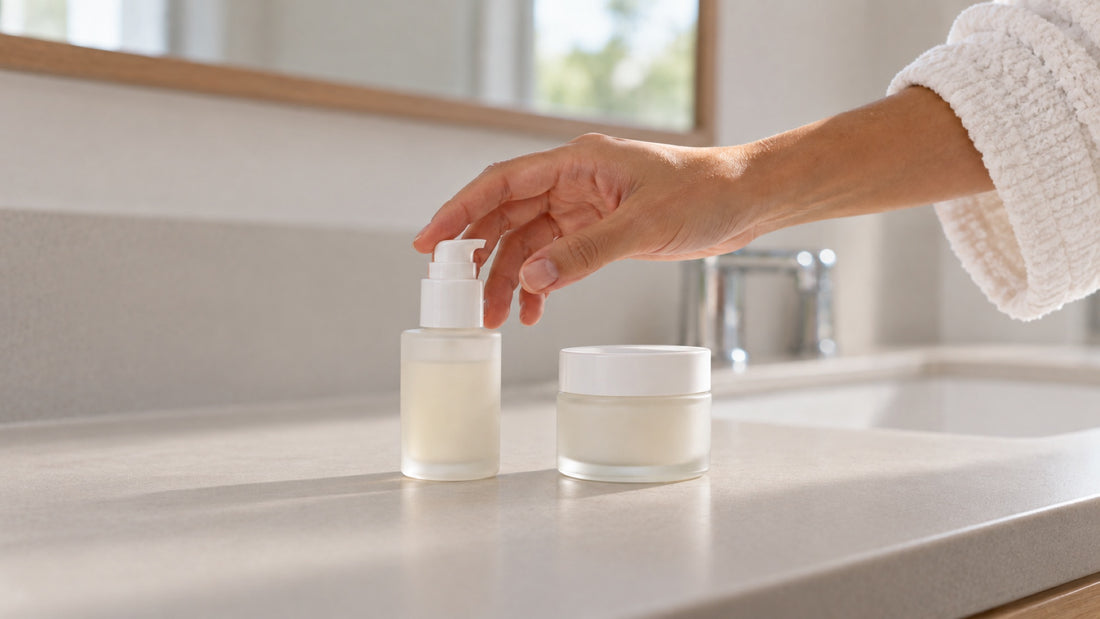
Seal it, within a minute or two. This is the part where most "HA alone will fix my dehydration" routines come apart. You want a moisturising cream over the top — ideally one that combines humectants with occlusive and emollient ingredients that reduce how quickly that bound water escapes. The point is to shut the door before the sponge dries out.
A format that works well in a humid city like Singapore, where you don't necessarily want a heavy balm, is a watery-but-sealing cream. SSUNSU's Water Bomb Hyalu Ginseng Moisture Cream is a reasonable example of the category: its ingredient list stacks several hyaluronic acid molecules (sodium hyaluronate, hydrolyzed hyaluronic acid, sodium acetylated hyaluronate, hyaluronic acid itself and a few more) with emollients and cocoa seed extract, and its headline job per the brand is to "lock in moisture for calm, supple skin all day." It's a plausible last step after an HA serum if you want something lightweight — the point is to use a cream, not specifically this one, but a cream whose job description includes trapping water rather than only adding it.
What this means for your routine, actually
A few things fall out of the sponge model, if you take it seriously:
- A hyaluronic acid serum, used by itself, is a half-finished routine. On its own in a dry room, it can feel actively worse than skipping it.
- A hyaluronic acid serum applied to clean, damp skin and immediately sealed with a cream is doing what the marketing claims — binding water in your upper skin, slowing it from evaporating, making your face feel softer for hours.
- "More hyaluronic acid" is almost never the fix for persistent tightness. More sealant usually is: a slightly richer cream, or a thin occlusive layer at night.
- If your room is dry enough that you can feel it (static clothes, chapped lips in the morning), a humidifier does more work for your skin than another serum.
A quick note on molecular weight
You'll see HA products boasting about "low molecular weight" versions that penetrate deeper, and "high molecular weight" versions that stay on top. The underlying research — small studies using techniques like Raman spectroscopy to see where HA actually ends up in human skin — does suggest smaller HA molecules can move further into the stratum corneum than larger ones. Whether that translates to a dramatic difference in how your skin looks and feels is less clear, and most of the serums you'll pick up in a store already blend several sizes. It's a nice feature when it's done well. It isn't a reason to agonise over the number on the box.
The bigger lever, by a wide margin, is still the two-step fix at the top: damp skin, then seal.