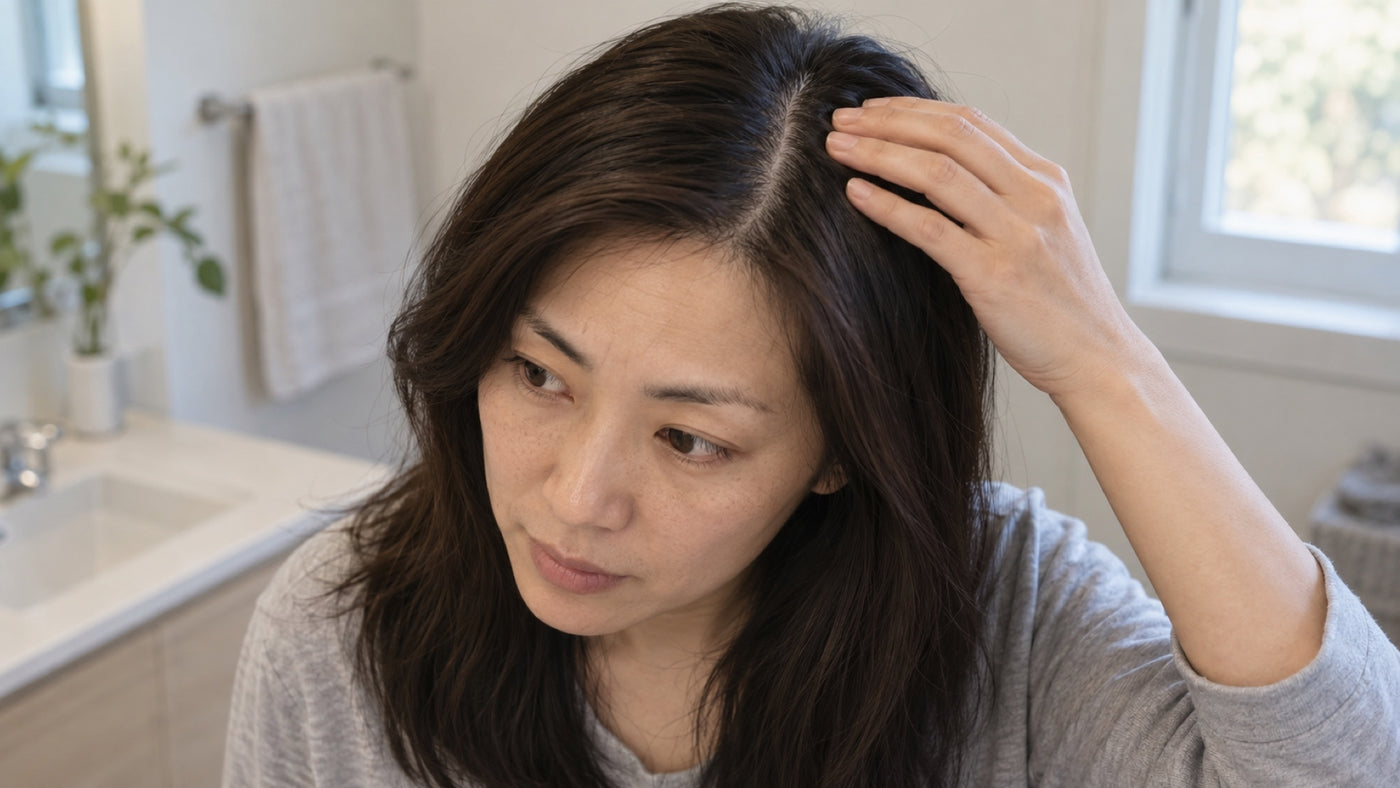
There's a persistent idea in hair-care circles — that if you just stop washing your hair so often, your scalp will "get the message" and produce less oil. It's almost intuitive. Skin can get overcleaned. Washing strips. Give it time. The scalp will balance itself out.
It's a nice theory. It just isn't how the sebaceous glands on your scalp actually work.
Does washing less really "train" your scalp to make less oil?
The short answer dermatology keeps giving is no. Sebum output is set mainly by genes, androgens and age — production climbs steeply at puberty, stays high through your thirties, then tapers from midlife onward (Acibadem Hospitals Group). Nothing about the surface of your scalp — how much oil is sitting on it, how recently you shampooed, whether your hair feels greasy at 3pm — is a signal those glands read and respond to.
What does change when you don't wash is how much oil accumulates on the scalp surface, how long it sits there, and what happens to it chemically while it waits.
What the published research actually says about washing frequency
The most useful review on this question is a 2021 paper in Skin Appendage Disorders by Punyani and colleagues, which pulled together two studies of Chinese adults without scalp disease — a 1,500-person epidemiological study of real-world washing habits, and a 5-week trial of 60 low-frequency washers who switched to daily washing (Punyani et al., 2021).
A few findings worth sitting with:
- Participant satisfaction peaked at 5–6 washes per week, not two or three.
- In the switch-to-daily trial, daily washing beat weekly washing on every endpoint the authors measured.
- Expert-graded flaking fell as wash frequency rose — including in people who didn't have dandruff at baseline.
- The authors concluded that "overcleaning" worries were "unfounded both objectively and subjectively," including no measurable loss of the internal lipids inside the hair fibre.
Two honest caveats worth stating: the authors are Procter & Gamble–affiliated, and the switch-to-daily trial used a medicated shampoo. Treat the exact numbers as directional rather than definitive. But the overall pattern — more washing didn't harm oily scalps and did help them — lines up with what dermatology clinics tend to say in practice.
The oil on your scalp changes while it sits there
This is the part most "wash less" advice skips. Sebum isn't a static substance. From the moment it reaches the scalp surface, it starts being chemically altered — oxidised, broken down into free fatty acids and other irritating byproducts. The longer it stays, the more altered it gets.
The review also connects this to two things oily-scalp Singaporeans will recognise:
| Common complaint | What the cited research links it to |
|---|---|
| Itch getting worse a day or two after you wash | A 1997 Kato study found itch severity rose over the 72 hours after shampooing, in step with sebum building back up on the surface. |
| Flakes that come with oiliness, not dryness | Infrequent washing was associated with higher Malassezia yeast levels and higher inflammatory cytokine levels in a 2016 Kobayashi study the review cites. |
In other words: by the time your scalp feels "it's time", a reasonable amount of what's irritating you isn't the fresh oil — it's the aged version of it, plus whatever's been metabolising it.
What this looks like in Singapore specifically
Humidity doesn't make your sebaceous glands produce more oil per se, but it does change how the oil behaves. In 30-plus-degree, 80%-humidity afternoons, you're sweating onto an already-oily scalp, your hair stays slightly damp against your head, and sebum has a longer, warmer, moister window to break down. A wash routine that works fine in Tokyo autumn or Melbourne winter can feel entirely wrong by Wednesday in Singapore.
The practical upshot for most oily-scalp readers here is boringly simple: wash more often, not less. Daily to every other day is well within the range dermatologists call reasonable for a genuinely oily scalp (Acibadem Hospitals Group). Dry, curly, coily or heavily colour-treated hair sits elsewhere on the spectrum — the "wash less often" advice makes more sense there, which is probably how it got generalised to everyone in the first place.
What to actually use
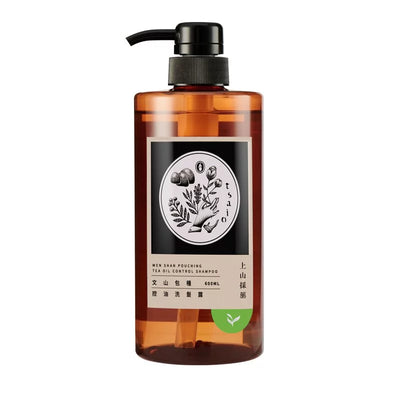
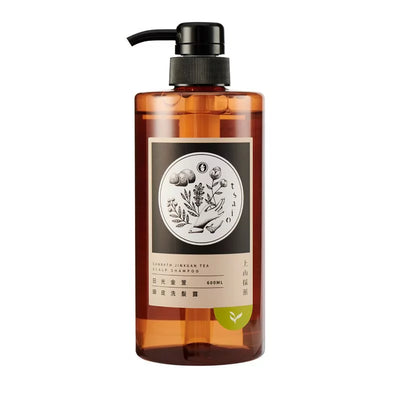
For a straightforwardly oily scalp with no diagnosed condition, the formula doesn't need to be elaborate. A gentle cleanser you're willing to use often beats a stripping clarifier you dread. If you want a middle option that's built around oil-control without being harsh, Tsaio's Wen Shan Pouchong Tea Oil Control Shampoo ($18, 600ml) uses oolong tea extract, panthenol and thyme to deep-cleanse surface oil while leaving the hair soft enough to actually want to wash tomorrow — which is the point of a daily shampoo. It's a reasonable fit if "stops greasing out by lunchtime, doesn't leave hair squeaky" is what you want from the bottle. (For a sister bottle with the same tea-forward approach, Tsaio also makes a Sunbath Jinxuan Tea Scalp Shampoo tuned toward overall scalp comfort.)
If you're seeing persistent flakes, redness or itch that doesn't lift within a few weeks of a consistent routine — or flakes that are thick, silvery, or extend past the hairline — that's a dermatologist conversation, not a shampoo swap. Oily scalp and seborrheic dermatitis share a lot of surface signs but need different handling.
Who the "wash less" rule still fits
To be fair to the folklore, it isn't wrong for everyone. People with coarse, coily or chemically-processed hair genuinely tend to look and feel better on a lower-frequency schedule — curls slow oil migrating down the shaft, so the scalp can take longer to feel saturated, and the ends benefit from the extra protection. Dry or bleached hair is also a legitimate case for washing less. The mistake isn't the rule itself; it's applying it, unmodified, to a Singapore summer afternoon on a fine, straight, oily head.
If your scalp feels oily by the afternoon, the first thing to question isn't your shampoo — it's the inherited belief that washing less will fix it. For most oily scalps in Singapore weather, more frequent washing with a gentle oil-control formula is the lower-effort, better-supported move.