The pitch is almost too good to be true: a bottle you squeeze onto wet hair twice a week, no prescription, that quietly competes with the drug most dermatologists reach for first. It sounds like exactly the kind of claim beauty marketing is built on. The strange part is that there is, in fact, a peer-reviewed trial behind it — and the full picture is more useful than either the ads or the comment-section skepticism.
Caffeine ended up in hair products because of a very specific piece of lab work. In cell-culture studies, caffeine appeared to counter some of the growth-slowing effects of testosterone on human hair follicles — the same biochemistry that drives androgenetic alopecia, the common pattern thinning that affects a large share of men and a smaller but meaningful share of women. If a hair follicle, grown in a dish, responds to caffeine the way those studies suggested, the next obvious question is whether caffeine put onto a real scalp, under real shampoo-contact conditions, can reach the follicle at all. Short answer: yes. Longer answer: that is still not the same as proving regrowth.
Does the caffeine from a shampoo actually get into the scalp?
This is the question caffeine-shampoo brands have been trying to settle for about two decades. A 2025 systematic review in Healthcare pulled together nine clinical trials of topical caffeine for hair loss, with 684 participants in total — the great majority of them men with androgenetic alopecia. The authors note that mechanistic studies have shown caffeine can penetrate down into the follicle even with only a few minutes of contact time, which is the window a normal shampoo gives you. So the "it washes off before it does anything" worry is less of an issue than you might expect, as long as the formula is designed around that short contact window.
The same review is the most useful place to anchor expectations. The authors graded each trial with the standard GRADE framework: three were rated medium-quality, one low, and five very low. Caffeine concentrations were disclosed in only two of the nine studies. Most trials were open-label — meaning participants knew what they were using — and uncontrolled. The authors conclude that caffeine looks safe and potentially useful, but that bigger, placebo-controlled, blinded trials with properly disclosed concentrations are still needed before anyone can call it a settled treatment.
The caffeine-versus-minoxidil trial everyone cites
If you've seen a headline claiming caffeine performs "as well as" 5% minoxidil, it is almost certainly referring to one trial: a 2017 open-label, randomized, multicentre study of 210 Indian men with Hamilton-Norwood stage III to V androgenetic alopecia, published in Skin Pharmacology and Physiology. Half got a 0.2% caffeine-based liquid, half got the standard 5% minoxidil solution. After six months, the minoxidil group's share of hairs in the active growth (anagen) phase had risen by 11.68%, the caffeine group's by 10.59% — a difference of just over one percentage point, well inside the pre-set non-inferiority margin.
That is a real result, and it is the strongest single piece of human evidence this ingredient has. Two caveats are worth being honest about. First, the trial was open-label: no one was blinded to what they were using, which can inflate perceived benefit in both arms. Second, the study was explicitly funded by Dr. Kurt Wolff GmbH & Co. KG — the manufacturer of Alpecin caffeine shampoo — with one author employed by the sponsor and another acting as a consultant. That doesn't automatically make the result wrong. It does mean that until an independent group reproduces the same finding, the sensible position is "promising, not proven equivalent." The 2025 systematic review above lands in roughly the same place.
Where a caffeine shampoo honestly fits in a routine
Three things follow from the actual evidence, rather than from the ad copy.
If you are genuinely losing hair — a widening part, a thinning crown, a sudden increase in strands coming out — the right first step is a doctor's visit, not a new shampoo. Pattern hair loss has evidence-backed options (minoxidil for both sexes, finasteride for men, among others); other causes of shedding, like iron deficiency, thyroid issues, post-illness telogen effluvium or scarring alopecia, need to be ruled out before you spend money on anything topical at all. If you're not sure whether what you're seeing is real loss or a normal shedding cycle, our piece on hair shedding vs hair loss is a useful place to start.
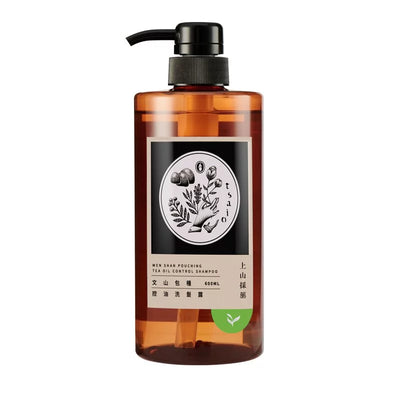
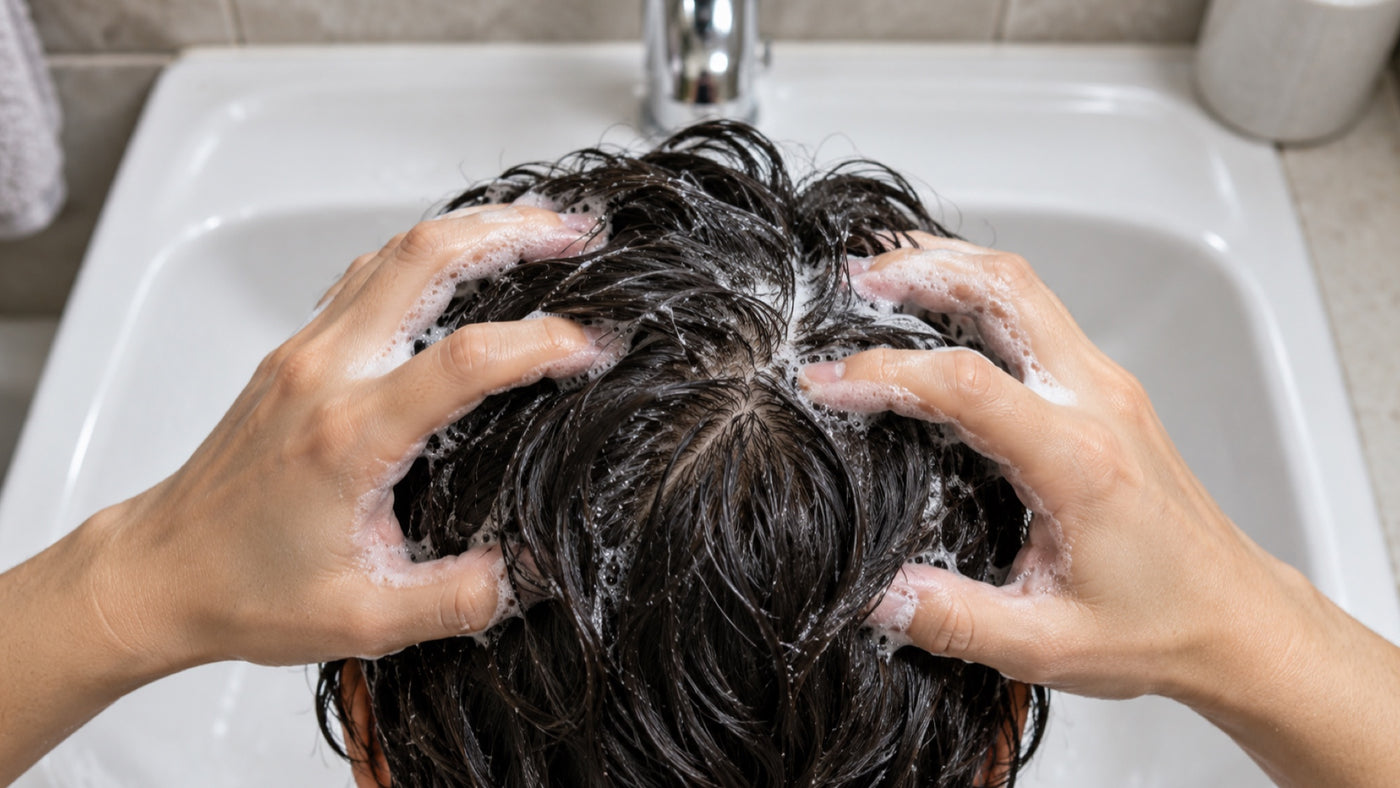
If you want to add a caffeine shampoo for scalp care, treat it as a scalp-hygiene step rather than a treatment. That means using it as directed, giving it a minute or two of contact before rinsing (several of the penetration experiments used short, defined contact times), and judging it on how your scalp feels — not on hair count at three months. If you want a cleansing wash that happens to include caffeine as part of a scalp-focused formula, FYPIRL stocks Tsaio's Wen Shan Pouchong Tea Oil Control Shampoo (600 ml, S$18), which pairs caffeine with Wen Shan oolong tea extract, panthenol and thyme. It is marketed as an oil-control cleanse for people whose scalps feel heavy by the end of the day, not as an anti-hair-loss treatment, and that is the correct frame.
Finally — and this is the part the marketing is quietest about — if a caffeine shampoo were the real answer to pattern hair loss, dermatology clinics would have shelved minoxidil years ago. They haven't. That tells you something useful about how specialists weigh the current body of evidence.
Table: what caffeine shampoos can and can't honestly claim
| The claim | What the evidence actually supports |
|---|---|
| Caffeine can reach the hair follicle through a wash | Yes — penetration studies cited in the 2025 systematic review support this, with short contact times |
| Caffeine shampoos are a replacement for minoxidil | No — one open-label, industry-funded trial suggests non-inferiority at six months; no independent replication |
| Caffeine shampoos regrow hair you've already lost long-term | Not established — trials are mostly short, small, and of medium-to-very-low GRADE quality |
| Drinking more coffee has the same effect | No — the amount of caffeine that reaches scalp follicles from oral intake is far below topical application |
| It's a reasonable scalp-care addition for mild concerns | Reasonable, as long as expectations stay modest and real hair loss is worked up by a doctor |
If you're worried about real hair loss, book a doctor's appointment first — caffeine shampoo is a reasonable scalp-care addition for a routine, but it is not the main lever and should never replace a proper workup.